The denial-prevention playbook for independent practices
Turn recurring rejection reasons into visible work rules at registration, case setup, charge entry, and claim preflight.
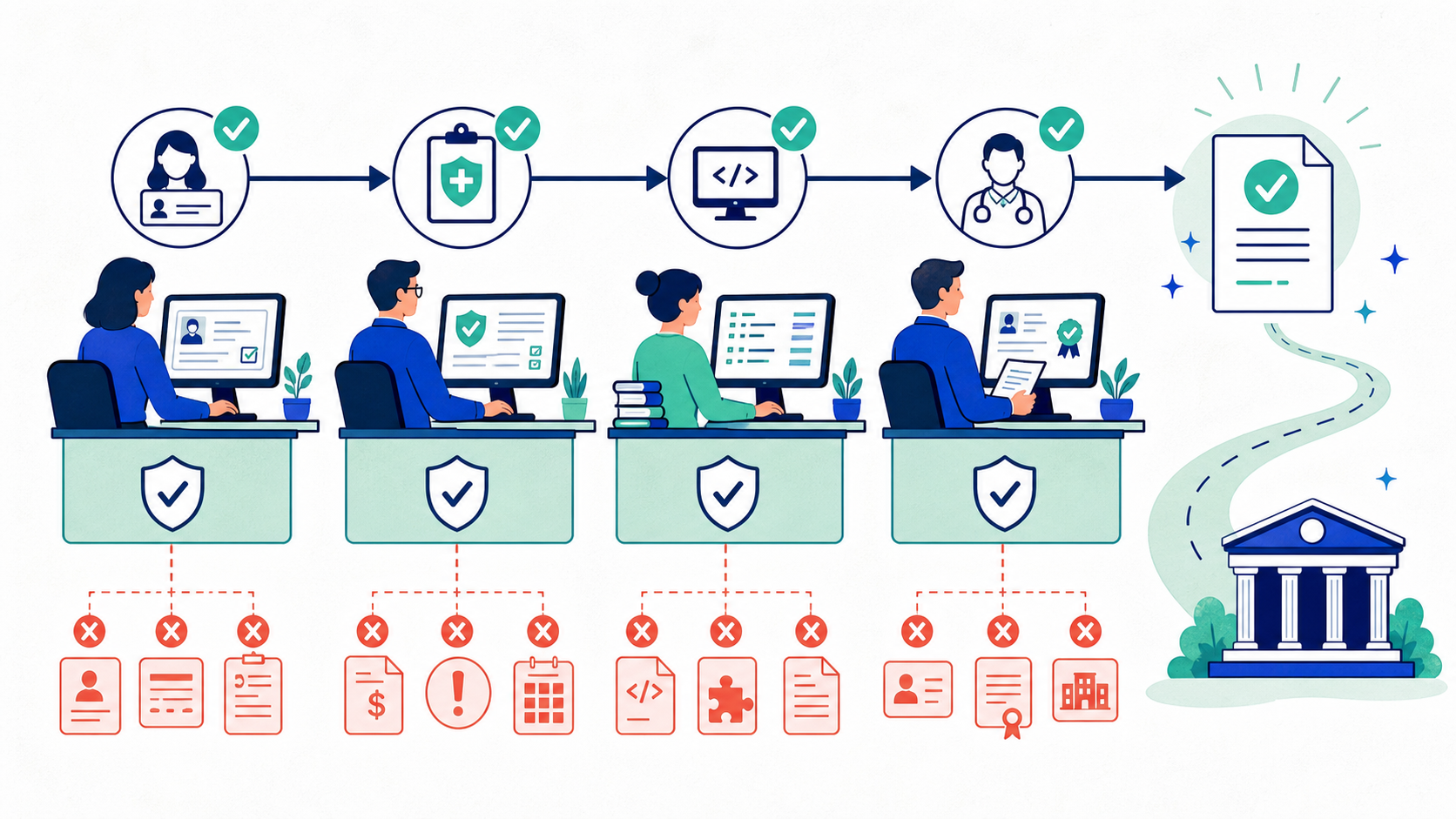
Denials are rarely one isolated billing mistake. They are usually a signal that context was incomplete earlier and no one could see the gap before submission.
Classify the actual source
Separate eligibility, authorization, coding, provider enrollment, timely filing, and receiver-format failures so each issue has a real owner.
Move prevention upstream
When the source is known, place the check at the earliest workflow where the responsible person can fix it.
- Eligibility at registration
- Authorization at case setup
- Coding consistency at charge entry
- Receiver rules at preflight
Measure prevented work
Track corrected-before-submit items alongside denials. A falling denial rate without visible prevention data can hide manual effort.
Build denial categories around action
Useful denial management begins with categories that point to a responsible workflow: patient identity, eligibility, coordination of benefits, authorization, provider enrollment, coding, medical necessity, timely filing, duplicate billing, and claim-format errors. A generic rejected or denied label cannot tell the team what to fix, where to fix it, or whether the same problem is increasing.
Prevent eligibility and authorization denials
Verify active coverage for the date of service, subscriber relationship, plan order, and payer-specific referral or authorization requirements. Attach authorization details to the patient case and expose remaining visits or date limits in scheduling and charge entry. Prevention works best when the scheduler and biller see the same case information before the encounter is released.
Prevent provider and coding denials
Validate billing, rendering, referring, ordering, and facility identifiers against the payer arrangement. Review diagnosis specificity, procedure compatibility, modifiers, units, place of service, and diagnosis pointers before batching. Provider-signature behavior and identifiers should come from configurable payer and facility rules instead of one hard-coded form value.
Turn denial trends into measurable improvement
Track denial rate by payer, provider, location, procedure, reason category, owner, age, and resolution outcome. Pair that with prevented-before-submission exceptions. Monthly review should identify the highest-volume preventable source, assign one workflow change, and measure whether both denial count and correction time fall.
What practice teams ask next
What are the most common preventable claim denials?
Frequent preventable categories include inactive coverage, missing authorization, incorrect subscriber data, provider enrollment or NPI problems, coding and modifier errors, and timely-filing issues.
What is the difference between a rejection and a denial?
A rejection usually occurs before adjudication because the transaction or claim cannot be accepted for processing. A denial occurs after the payer adjudicates the claim but does not approve payment as billed.
How should a practice measure denial prevention?
Track first-pass acceptance, rejection rate, adjudication denial rate, prevention exceptions, correction time, and recurrence by reason and workflow owner.
Map denial prevention into your workflow
Bring one real scenario to a focused QMED+ session and see how the workflow, source data, and final output stay connected.
Book a workflow session