Ready for care
Know the patient
Identity, coverage, guarantor, and case context begin together.
Schedule care, build clean claims, post every dollar, communicate balances, and understand what needs attention next.
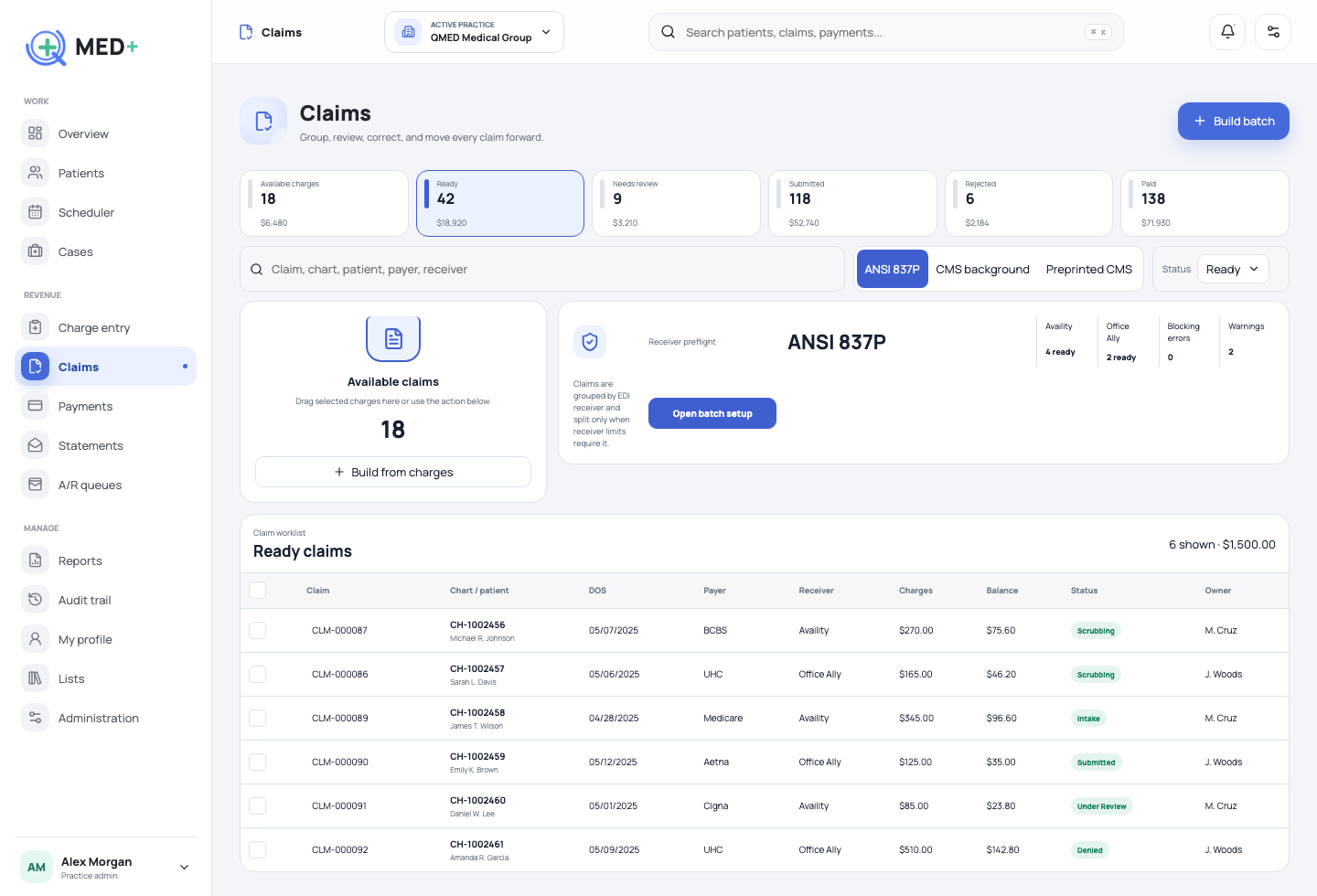
One connected process carries the patient, case, payer, provider, and accounting story forward without asking the team to rebuild context at every handoff.
Identity, coverage, guarantor, and case context begin together.
Provider time, location, reminders, and case context move as one.
Charges inherit the right provider, facility, diagnoses, and payer story.
CMS and EDI preflight expose the source of an issue before submission.
Payments, adjustments, statements, and balances reconcile visibly.
Each view below follows a real QMED+ operation from action to outcome.
1Coverage lives away from the case
2Errors surface after submission
3Payments change balances without a clear story
4Patients receive a number instead of an explanation
Context follows the patient workflow
Preflight catches the problem at its source
The ledger explains every movement
Statements turn activity into a clear path to pay
Receiver-aware preflight groups claims correctly, highlights the exact source of an error, and keeps ANSI 837P and CMS-1500 output tied to the same claim record.
Move and resize appointments, filter by provider and location, protect resources, and keep reminder settings connected to the appointment workflow.
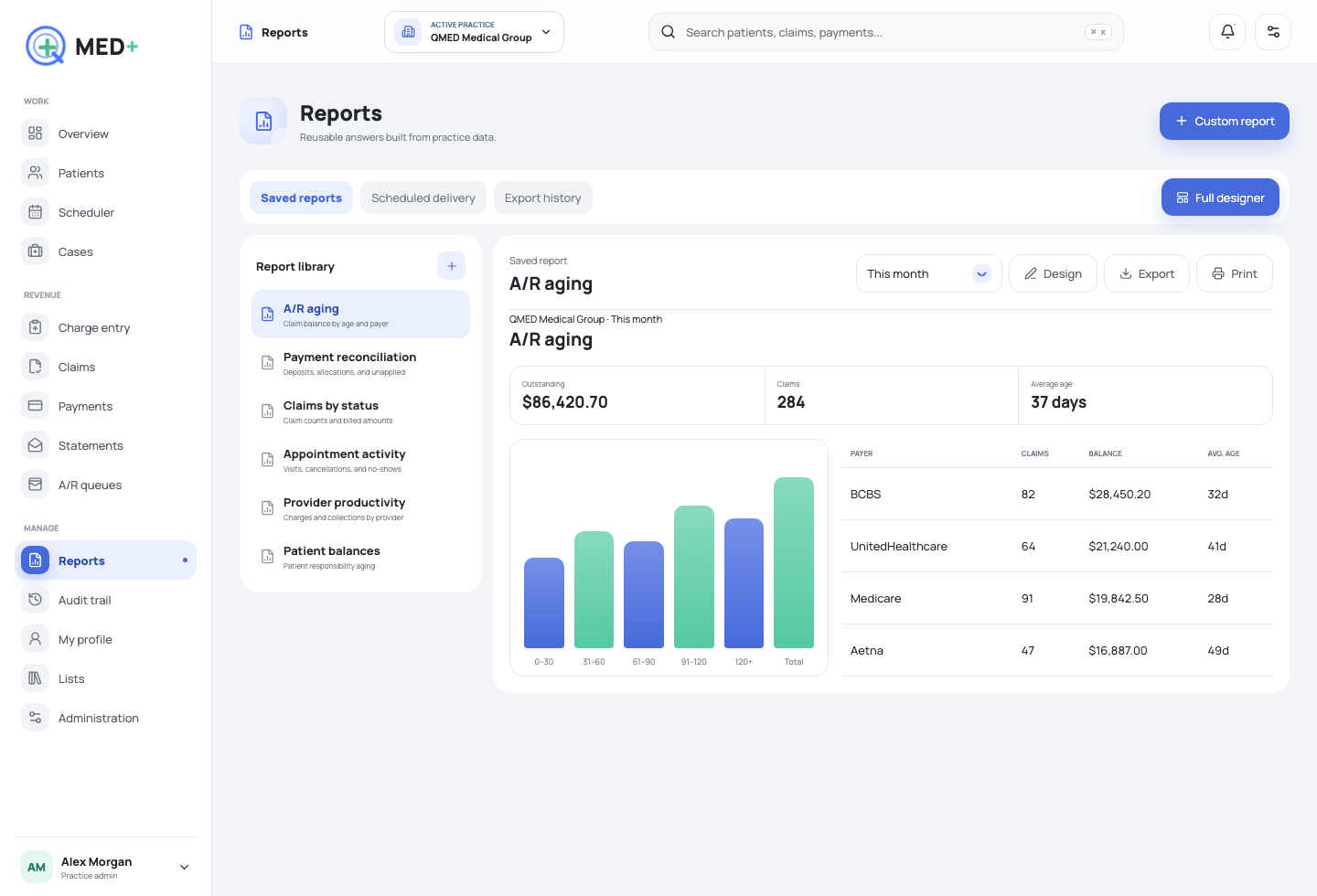
Post by claim and charge, retain editable payment lines, resolve unapplied funds, and see patient responsibility without losing the original transaction.
Every claim moves through patient, coverage, provider, service-line, receiver, and envelope validation before transmit.
1Patient and subscriber data
2Billing and rendering identifiers
3Diagnosis and service-line pointers
4Receiver companion rules
5837P envelope and control numbers
The patient, case, payer, provider, and ledger stay connected while the task changes shape.
Walk through my workflowQMED+ is designed to change the quality of the day, not only the color of a metric.
See what is ready and what is not.
Less re-entry and fewer status hunts.
Allocation stays visible until reconciled.
Every team reads the same account history.
“The biggest change is not one feature. It is that our staff can see the next action without hunting through five places.”
Practice administratorMulti-provider medical group
A complete patient-to-payment workflow without enterprise software weight.
Plan my QMED+ setupShared standards across providers, locations, billers, and practice assignments.
Plan my QMED+ setupPractice-aware access, reporting, scheduling, and financial control.
Plan my QMED+ setupNo generic handoff. No unexplained provisioning. Each stage has a visible outcome your team can verify.
Plan my implementationMap the exact workflows costing the team time.
Configure practices, users, lists, receivers, templates, and migration.
Test real claims, statements, posting, reports, and print output.
Launch with guided support and visible operational checkpoints.
Patient-to-payment core workflows
See plan detailsAdvanced reporting and multi-location control
See plan detailsOperational support across the cycle
See plan detailsYes. Migration is scoped around your current system, data quality, attachments, balances, and historical reporting needs.
QMED+ is designed around CMS-1500 and ANSI 837P professional claim workflows, including receiver-aware validation and batching.
Yes. Roles, permissions, and practice assignments are managed independently.
Yes. Templates can include charge, insurance payment, guarantor payment, adjustment, and remaining-balance detail.
 01
01Build a repeatable preflight that catches patient, payer, provider, coding, and receiver problems before transmission.
Read article 02
02Move beyond a final balance by showing the transaction story, clear responsibility, and a direct path to payment.
Read article 03
03Understand source, payer, line allocation, patient responsibility, adjustments, and unapplied funds as one controlled workflow.
Read article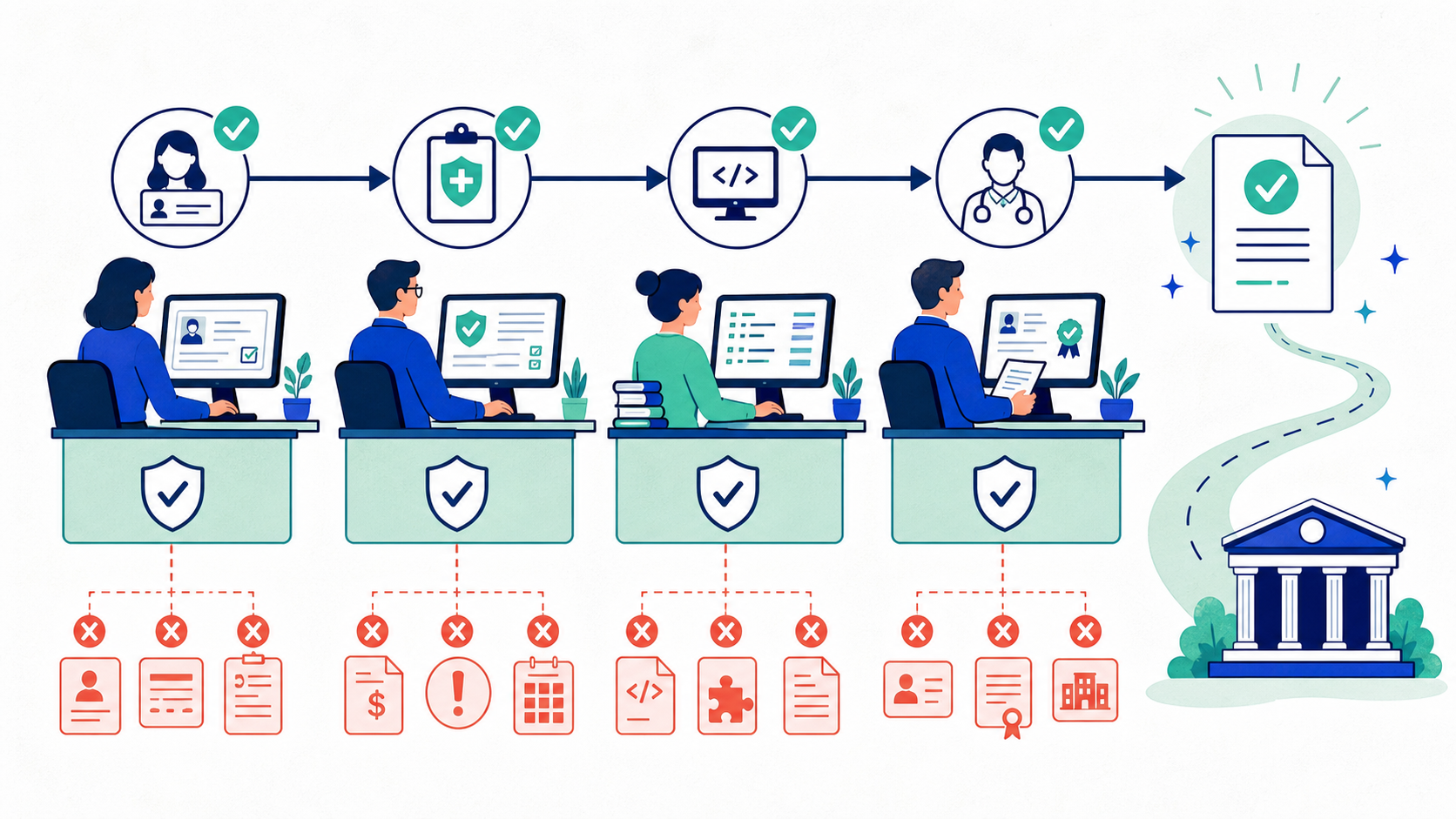 04
04Turn recurring rejection reasons into visible work rules at registration, case setup, charge entry, and claim preflight.
Read article 05
05Keep appointment, patient, case, provider, location, and service context together so completed visits become billable work without re-entry.
Read article 06
06Understand accepted, accepted-with-errors, and rejected transaction sets without confusing syntax acknowledgement with payer adjudication.
Read articleA focused demo built around your practice, not a generic product tour.